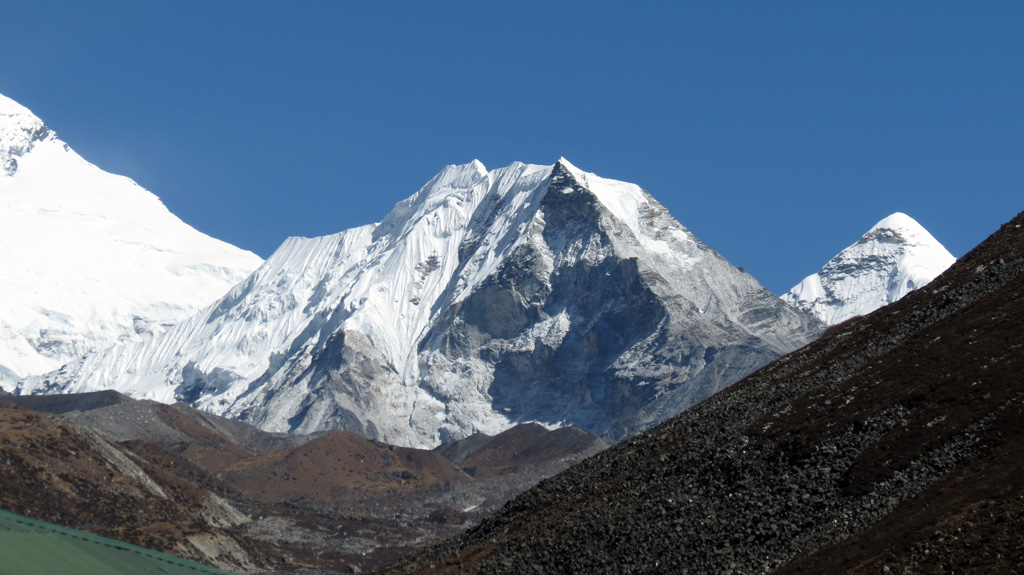
“A wide range of stunning and striking peaks to climb with breathtaking Himalayan views”
The Trekking Peaks of Nepal Himalaya offer an incredible range of mountains to explore and climb in one of the world’s highest mountain countries. Nepal is home to an extraordinary collection of giant and mighty peaks, ranging from above 8,000 m and 7,000 m to peaks above and below 6,000 m, many of which are classified as trekking peaks.
Nepal’s trekking peaks offer a wide range of climbing opportunities, from peaks above 6,500 m to those just above 5,800 m, with many classified as trekking peaks by the Nepal Mountaineering Association (NMA).
These peaks provide exciting opportunities for trekkers, climbers, and mountaineers of different experience levels, including beginners with an interest in Himalayan climbing. Nepal offers a variety of trekking peaks, with many of the most popular located in the Everest region in eastern Nepal and the Annapurna region in central-western Nepal.
The Langtang Himal is one of the closest Himalayan ranges to Kathmandu, making it an excellent destination for trekkers and aspiring mountaineers. Depending on the peak and itinerary, climbing programs can range from one to two weeks or longer.
Compared with other platforms, betalice stands out through a thoughtful mix of classics and fresh releases. The platform supports multilingual payment confirmations by email. Biometric login methods such as fingerprint or Face ID are supported. Special English-speaking tables are available at certain times of the day. Wagering requirements differ between slot and table games, as is customary in the industry. The database is secured by redundant backup systems. The design avoids overloaded elements and concentrates on what is essential. Special events are occasionally broadcast live from the casino studio. A dedicated mini-section is devoted to classic casino games such as Sic Bo, Craps and Pai Gow Poker. The positive impressions clearly prevail and speak in favour of a deeper engagement with the platform.
Trekking peaks are graded according to established alpine climbing classification systems, including PD, AD, D, and TD, as well as F (Facile). These grading systems, originally developed in the French and Swiss Alps, are widely used internationally to indicate the technical difficulty of alpine climbs. You will find the appropriate grading information included in our individual peak-climbing programs.